The Beauty of Production

Production to me has a certain air of beauty about it. To me, the burgeoning growth of a row of potatoes rivals a well-kept flower bed, and certainly surpasses the look of a manicured lawn.  The riotous colours of swiss chard wonderfully assails my vision, and apple blossom, whilst unarguably endowed with good looks, also speaks of the crisp home-grown fruit to come. The present beauty of the garden is even more, because it comes with the promise of the future  harvest. Not that I don't like flowers for the sake of flowers, for I grow these too.

This months blog is a simple collection of photos, taken in the evening's fading light. Enjoy, and hopefully be inspired.

Self-sown calendula that has been flowering all winter. We use the petals for a splash of edible colour in our winter and spring salads. 

Eat your colours. Swiss chard (silverbeet), again self-sown and left to grow where it won't get in the way. Delicious wrapped in tinfoil and steamed on the barbeque with sea salt, lemon juice, and olive oil.


Borage flowers. This easy to grow herb attracts bees to the garden (needed to pollinate the apples) and the flowers are a great edible addition to salads. What other foods are naturally light blue?  


Apple blossom, with a delicate beauty at odds with our cold and blustery spring weather.

The beauty of brown. Here my daughter, Annabelle, is applying the fertiliser in preparation for potato planting in mid-September. This area was lawn until March 2012. The following photograph is the same bed one month later. 

Potatoes planted in a trench, then progressively mounded with alternating layers of soil and hay. We are trying five varieties (Jersey Benne, Cliff Kidney, Heather, Ilam Hardy, and Agria) so we can spread the production over several months. 


The last of the freesias. Grown in a planter box I inherited from my grandmother, they erupt in a riot of colour and fragrance each October. 

No lack of colour in this home-grown spring salad. Lettuce, corn salad, carrots, alfalfa, and borage flowers.

The happiness of green.  Bok choi, mesclun, coriander, and lettuces.


And for those of you who request more gardening advice:
  • Plant potatoes now for harvest in February-March
  • Sow cucumbers, tomatoes, courgettes, and peanuts inside for later transplant.
  • Prepare ground for planting beans in early November (dig in compost and lime)
  • Direct sow first crops of mesclun and radishes.
  • Plant punnets of spring onion, broccoli, and beetroot.
  • Get a head start on your tomato crop  by purchasing and planting a couple of well-established tomato plants.  


A year in the garden: It's simply "Providence"

Providence. An old fashioned word, and one of my favourites. It sums up the topic of my last year of blogging nicely, and gives tribute where I think tribute is due.

A noun defined as "the protective care of God or of nature as a spiritual power, or God or nature as providing such care" (Merriem Webster Dictionary), this word is increasingly out of favour. It's increasingly odd to give thanks for the sunshine that powers all life on our planet (as well as growth in my garden), rain that waters the crops, or a good harvest. Increasingly, progress and change in our Universe, from the growth of a harvest from a packet of seed, to the birth of a supernova, is merely attributed to inevitable changes in matter, with neither divine instigation nor guidance. I know providence is no longer a commonly used word, or even part of a commonly held world view, but for me, the providence I experience through my 40 m2 of dirt can be a frequent reminder of the benevolence of my creator, and the soil he gave me to work.

And these thoughts are perhaps the lens through which I consider the past year in my garden. The full cycle of winter, spring, summer and autumn has passed, and through it all, our little piece of Auckland urban soil has provided in abundance. Salad greens, tomatoes, beans, courgettes, peas, herbs, parsnips, carrots, yams, potatoes, rhubarb, kale, brocolli, tat soi, raspberries, boysenberries, mizuna, yacon, Jerusalem artichoke, peaches, apples, and many more. Every week, every month, every season. The garden has provided for us plentifully, and even at times provided meals for which no food was purchased. But even greater than the mere filling of stomachs, the garden genuinely enriches our lives. We are less removed from the planet that sustains us, and I hope, better stewards with what we have been entrusted. We willingly partake of sometimes forgotten cycles, consuming food that grew in yesterday's waste (if I may frame "composting" poetically), and collect seeds at the end of the season so that the source of the next crop is assured. And even though we are a household of five, we produce surplus to share with friends and neighbours.

The final months of the year-long cost-benefit analysis (June and July), brought the total for the year to $1320.97. That's an average of $25.40 a week, or $3.70 per day. And while it was a great exercise in documenting just how much food a backyard can produce, and what crops are the best in terms of dollars saved, ALL of the family are rather glad we can stop weighing every gram of every tomato or bean that comes in the door.


The summer peak is predictable - its the season of endless warmth, and, thanks to the garden hose, plenty of water. The lean months of August through to October are due in part to the shady nature of our garden in the winter - its just too cold and wet for even cold hardy crops such as brocolli to germinate and grow, and the autumn sown crops are coming to an end. If the garden had full sun, $50-$100 per month would easily be achievable.  Because all of these crops were weighed and valued month by month, the next step is to work out which crops are the best value for area occupied, and which ones really dont justify their presence in small back-yard vegetable gardens. But that will be the topic of my next blog.

Thank you for reading so far - the annual cycle has ended, but my writings have not.

Tim

Guerilla Gardening

Something deep inside me wants to be a world-changer. To go beyond the comfort of my own existence, and do something out of the ordinary, perhaps even extraordinary. This doesn't always sit comfortably, it implies effort and the extension of oneself. To make a difference beyond the boundaries of one's everyday, and sometimes mundane existence, requires a new way of thinking and the willingness to be a doer. Some of the time I wish I was content with being run-of-the-mill, it would be easier.

Boundaries are set all the time for what we can achieve. Sometimes they are tangible, but at other times they are difficult to define (yet just as limiting). There are perceived boundaries posed by gender, ethnicity, and place of birth, legal boundaries (property boundaries, bylaws) and self-imposed boundaries (the "I can't do that" or "I won't do that, imagine what the neighbours might think"). So a world-changer is someone who is willing to challenge what is acceptable, the "status-quo", to achieve what others can't or won't.

And that is where, on a much more local scale, "guerilla gardening" has so much appeal to me. Thinking about the ways I might expand my garden beyond the confines of this 350 square metre lot - extending the garden into my neighbour's, the verges, the local school, areas of unkempt and weedy wasteland. I was trying to coin a phrase to encapsulate this philosophy when the words "guerilla gardening" came to me.  Eureka! Clandestine, perhaps sometimes even illegal gardening, but for the common good. 

So I have to admit when I googled "guerilla gardening" I was a bit crestfallen to see it was already a global phenomenon! Check out  http://www.guerillagardening.org/ or http://en.wikipedia.org/wiki/Guerrilla_gardening or the global GG community http://guerrillagardening.org/community/index.php?board=90.0

There is even a guerilla gardening book, and an "international sunflower guerilla gardening day". And guerilla gardening is happening in London, Korea, New York, Australia, Denmark, and the list goes on.

So what about me? As I write this I look out the window at a native shrubland in the local primary school. It was a muddy and forlorn slope  until I approached the principal and offered to design the garden, order the plants, and lay them out for planting. The principal agreed, and several hardy staff members turned up on a miserably cold and wet winters day to plant. Now, only a few years later, its the wildest part of the school grounds. The tallest trees are about three metres tall, there is enough dense cover for the children to make secret tunnels, and the birds are returning. So if you don't like your view, even if you don't own it, why not see if you can change it?

This success, and the realisation that I am actually a part of a growing  global army of guerilla gardeners, has got me thinking about where to next. I have just noticed several dumped trailer-loads of topsoil in an area of wasteland, wedged between a local road and the motorway. The soil is so good I am shifting it by the bucket-load to the most impoverished of my vegetable garden beds, but even after doing this, there will be plenty remaining. What crops can I get away with growing there? Would any plants get sprayed by road maintenance contractors? If I plant beans or pumpkins there in the Spring, will they stay there longer if they are in rows (so its looks orderly and cared for), or in random patches so they blend with the surrounding weeds? I won't invest a lot of time there, and I have low expectations that I will be the one to pick the crop, but I will give it a go. I think dwarf beans are my best bet - quick growing, inconspicuous, they wont need watering, and I could be harvesting eight weeks from sowing.

So is anybody else out there boxed in by houses and limited by space? Yearning for a bit more land to grow space-invading crops? Why not think extend yourself and look beyond your boundaries? World changing, probably not. But I reckon its a start.

Millions of Peaches

Millions of peaches, peaches for me, millions of peaches, peaches for free.......

Hearkening back to my not-so-reckless youth, this song lyric by "The Presidents" seemed aptly fitting this autumn. Our tree, upon receiving death threats for its  previous lack of fruitfulness, fronted up with 44 kilograms of delicious golden queen peaches, and that kept us very busy (hey, even Jesus cursed a fruitless tree, read Mark 11 v 12-14), The humid weather was threatening their loss the moment they were ripe, so we preempted the microbes with a ridiculous amount of stewing and freezing - our freezer is now well stashed with dessert-sized servings of peachy goodness stored in plastic clipseal bags. On one particular evening we had four sauce pans simmering away on the stove, and then emptied, refilled and repeated the process to do eight in the night!


One days pick from the peach tree (and a big night of processing ahead)!


This was also the first year I made a concerted effort to grow capsicums properly. Dedicated beds, transplanting out three month old, individually potted seedlings (started inside in the winter), fertiliser,  plentiful compost, and a mulch of pea straw. They took a while, with the first pickings in mid-February, but they are so useful over the summer months being tossed into salads or chargrilled on the barbeque. And we are still picking the last of them in June, so they completely outdid our tomatoes and beans for length of season. I for one am a convert to capsicums, and they will be added to the list of essential summer vegetables I grow every year.

The first capsicums "Dulce Espana" 


With a smallish backyard, I have also been snooping around the neighbourhood, foraging foods on public land. From our kitchen window you can get a glimpse of Hamlins Hill, a large lump of sandstone that protrudes above the houses and industrial estates, and which, thankfully, has remained as a reminder of our suburb's rural past. Hedgerows of historic hawthorn trees cut across the hilltops, and this autumn they glowed red with a heavy crop of fruit. Using trusty Google to find a use for them I experimented with hawthorn jelly - the labour for volume return wasn't favourable, but the flavour was pleasant and quite unique.

Hawthorn berries from Hamlins Hill (Mutukaroa Regional Park).

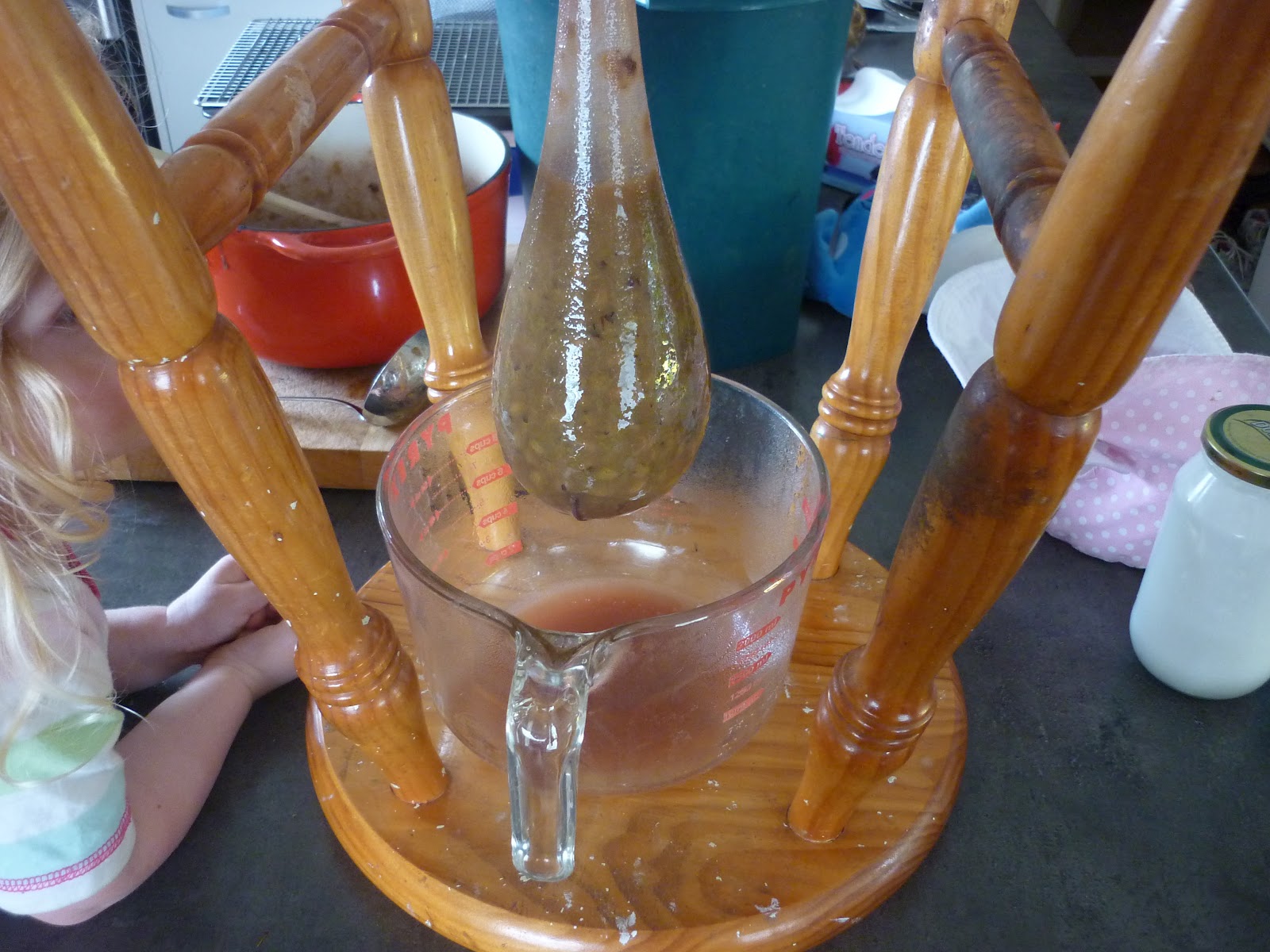
Boiled then strained using the traditional Martin family method (stocking and an upside down barstool!)

Hawthorn Jelly: the final product (after mixing 50:50 with sugar and simmering for 10 minutes). A great accompaniment to game meats.


Continuing the cost benefit analysis of the garden, the summer months have been very productive. Combined, during March, April, and May, the garden produced $486 worth of fruit and vegetables, after costs were considered (detailed breakdown below). And I don't think this is a particularly extraordinary year - our tomato and bean crops were poor due to excessive rain and humidity, and these are often, by value, the mainstay of our summer garden. Peaches were the highest value crop for March, followed by basil (the half- kilo harvest of basil leaves was used to make a years supply of basil pesto, also stored in the freezer). Capsicums, mesclun, and herbs were the big producers of April and May.  So for the 10 months calculated so far (August - May) the garden has produced, at Countdown prices, $1178 worth of produce (or an average of $3.80 per day). I was expecting about $800 for an entire year, so have rather underestimated the cost benefits of our forty square metres of dirt!


Entirely home-grown salad: lettuce, mesclun, cucumber, capsicum, yellow tomato (an heirloom French variety called Garden Peach), alfalfa sprouts, chick-pea sprouts.


However, even at $3.80 per day (or $117 per month) I forsee the intangible benefits as even greater. Gardening for me is therapy from a stressful day, my kids are growing up learning how to grow food, and knowing where at least some of their food comes from, and I appreciate inclement weather like rain and frosts (I am awaiting the first frosts to signal the start of the parsnip season). So while I have well and truly demonstrated that gardening is great in lean economic times, I suspect I would do it even if it came at a financial cost.

So if you don't have a garden, or if you think your lawn doesnt need to be as big as it is, why not start thinking about feeding your soul and your stomach? The ground is soft and its a great time of year to start.


Till next time,

Tim


March 2012
produce weight kg/# packs  retail value
alfalfa 3.00 2.15 6.45
beans 0.50 9.99 4.99
beetroot 0.24 3.99 0.94
raspberries/boysenberries 0.00 41.50 0.00
capsicum green 10.00 1.79 17.90
capsicum red 13.00 1.47 19.11
courgette 1.05 4.99 5.23
lemon grass 1.00 3.98 3.98
mesclun 4.00 3.50 14.00
kaffir lime 1.00 2.99 2.99
spring onion 1.00 1.79 1.79
apples 1.54 1.99 3.07
peaches 41.40 3.99 165.20
rosemary 1.00 2.99 2.99
silverbeet 2.00 2.79 5.58
strawberries 0.00 11.00 0.00
basil 0.52 99.50 51.24
cucumber 4.00 1.29 5.16
tomatoes 2.15 3.98 8.57
garlic 0.00 22.98 0.00
319.18
lime 9.00
celery plants 1.39
water 5.00
seeds 14.00
29.39
benefit minus costs 289.79

April 2012
produce weight kg/# packs  retail value
alfalfa 1.00 2.15 2.15
beans 0.07 9.99 0.66
beetroot 0.55 3.99 2.19
lemon 0.13 3.98 0.51
capsicum green 13.00 1.79 23.27
capsicum red 7.00 1.47 10.29
courgette 0.30 4.99 1.52
parsley 1.00 2.99 2.99
mesclun 5.00 3.50 17.50
kaffir lime 1.00 2.99 2.99
spring onion 0.25 1.79 0.45
apples 1.91 1.99 3.81
peaches 3.11 3.99 12.40
rosemary 1.00 2.99 2.99
sage 1.00 2.99 2.99
silverbeet 1.00 2.79 2.79
thyme 2.00 2.99 5.98
basil 2.00 2.99 5.98
oregano 1.00 2.99 2.99
tomatoes 0.29 3.98 1.13
bay leaves 1.00 2.99 2.99
108.57
water 5.00
seeds 8.97
13.97
benefit minus costs 94.60

May 2012
produce weight kg/# packs  retail value
alfalfa 2.00 2.15 4.30
rhubarb 0.62 6.99 4.32
beetroot 0.20 3.99 0.80
capsicum green 4.00 3.99 15.96
capsicum red 5.00 3.99 19.95
courgette 0.40 10.98 4.40
mesclun 4.00 4.15 16.60
kaffir lime 2.00 2.99 5.98
apples 2.44 3.48 8.50
rosemary 1.00 2.99 2.99
sage 1.00 2.99 2.99
silverbeet 3.00 2.99 8.97
thyme 1.00 2.99 2.99
basil 1.00 2.99 2.99
101.74
Costs 0.00
benefit minus costs 101.74